Ant control
Identifying ants
Black garden ants are 3 to 5 mm and nest outdoors. Pharaoh ants are 1.5 to 2 mm and live only inside heated buildings. Only the pharaoh ant needs urgent professional help.
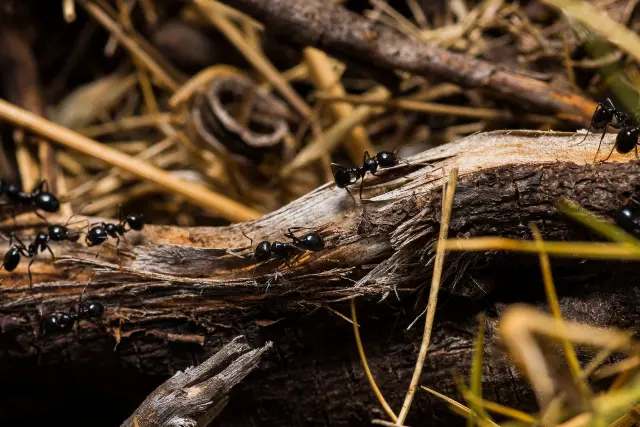
Black garden ant
The black garden ant (Lasius niger) is the common one. Workers are 3 to 5 mm long. The nest is outdoors, in lawns, patios and under paving. A colony can reach about 15,000 workers. They come indoors looking for sweet food.
See a steady line of ants crossing the kitchen worktop in summer? It is almost certainly this one. It is a nuisance, not a danger.
Pharaoh ant
The pharaoh ant (Monomorium pharaonis) is much smaller, at 1.5 to 2 mm. It nests only inside heated buildings, so it can be active in any month, not just summer. This is the one to take seriously.
Spraying makes the colony split into several colonies around the building, so a spray makes the problem worse. If you suspect pharaoh ants, don't spray them. See ant control for what a professional does.
Seasons
Black garden ants appear from spring and are busiest in summer. Flying-ant days fall in July and August.
Pharaoh ants don't follow the seasons, because they live indoors in the warm. An ant trail in the kitchen in January is more likely to be pharaoh ants than garden ants.
Flying ants
Flying ants are not a separate species. They are the males and young queens of ordinary ants, on a mating flight. This usually happens on warm, humid days in July or August. The Royal Society of Biology's Flying Ant Survey found the flights are spread over several weeks, not a single national day.
They can gather in large numbers around windows and lights. One flying day is normal. If they keep coming out of the same spot indoors, there may be a nest in the building.
Where the nest is
Outdoor nests are in lawns, patios and under paving. An indoor nest usually means pharaoh ants. They sit inside heated buildings, often in warm wall cavities, under floors or near hot pipes.
Follow the trail back to where the ants come from. A technician looks for the nest during a survey.
What ants are not
Ants are often mistaken for other small insects. Flying ants look like winged termites, but winged termites are not a UK house pest.
If you are unsure, a close photograph helps a technician name the ant quickly. That saves you paying for the wrong treatment.
How to tell which you have
Use this quick check:
- Size: 3 to 5 mm points to black garden ants. 1.5 to 2 mm points to pharaoh ants.
- Where they come from: a trail from outdoors fits garden ants. Ants in warm rooms in any season fit pharaoh ants.
- When: a mass of winged ants in July or August is a flying ant day.
If you are unsure, photograph the ants next to a coin and show the photo to a technician. Knowing the species decides the treatment. Once you know, see the DIY guide or the cost guide.
Will the council do it?
Few councils treat ants, so most people use a private firm. Ask the questions below before you book. See what your council treats
Questions people ask
What are pharaoh ants?
Tiny 1.5 to 2 mm ants that nest only inside heated buildings. Spraying them splits the colony, so call a professional.
What are flying ants?
Males and young queens on a mating flight, usually on a warm, humid day in July or August.
How big are black garden ants?
Workers are 3 to 5 mm long.
How do I find an ant nest?
Follow the trail back to where the ants come from. Outdoor nests are in lawns, patios and under paving. A technician can find an indoor nest.
Are flying ants a different species?
No. They are the same ants, out on their mating flight.