Ant control
Checked October 2026Ant control in your home
A pest controller works out which ant you have, then treats the entry points and the nest with residual spray and gel bait. Workers carry the bait back to the queen. It usually takes one or two visits.
Find ant control near you
Type your town or the first half of your postcode, or use your location.
Towns where most firms list ants
Will the council do it?
Few councils treat ants, so most people use a private firm. Ask the questions below before you book. See what your council treats
What a professional does
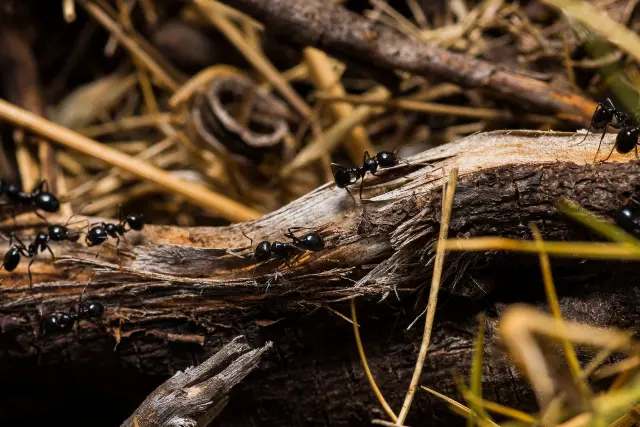
The first job is to name the ant. Most UK ant problems are black garden ants. They nest outdoors and look for food indoors.
The other ant to know is the pharaoh ant. It nests only inside heated buildings and needs urgent professional help. Our identification guide shows how to tell them apart.
The technician looks for the trail, the entry points and, if possible, the nest. They apply residual insecticide spray at the entry points and put down gel bait. Workers carry the bait back to the queen, so the colony fades from the inside. That usually takes one to two weeks.
One visit or two
Most garden-ant jobs need one to two visits. A second visit checks that the bait has been taken and the trail has stopped.
Pharaoh ants take longer and may need monitoring. Sprays make the colony split into several smaller colonies around the building.
Ask the firm how many visits the price covers. Ask too whether a free return is included if ants come back within a set period. The price guides do not mention a standard guarantee, so ask for one in writing.
How to prepare
A little preparation helps the technician. Before the visit:
- leave the ant trails alone, because the technician needs to see them
- keep food sealed, and wipe up sweet spills and crumbs
- point out where you see trails and where ants come in
- fix leaks and note any gaps around pipes, doors and windows
Afterwards, leave the bait where it is. Please don't wash it away. Our cost guide lists what a visit includes.
When to call a professional
Bait stations are the most effective DIY option. They clear most garden-ant problems in one to two weeks. Our DIY guide shows how to place them.
Call a professional if you think you have pharaoh ants. Call too if trails carry on after two to three weeks, or if you find more than one colony. Don't spray pharaoh ants yourself. It makes the problem worse.
What it does not include
A treatment deals with the ants and the entry points. It doesn't usually cover repairs. Cracks in brickwork, damp and gaps in door frames stay your job, or your landlord's.
If ants come back, ask the firm whether a return visit is free and how long it lasts.
Seal entry points early
Ants appear from spring, so seal entry points in early spring, before colonies get busy. Fill gaps around pipes, door frames and windows. Fix damp areas that draw ants in.
A technician can point out the gaps they find. Sealing is often charged separately from treatment.
Flying ants are not a separate pest
Flying ants are not a different species. They are the males and young queens of ordinary ants, out on their mating flight. This usually happens on a warm, humid day in July or August.
They are a nuisance, nothing more. If they keep coming out of the same wall or floor indoors, there may be a nest inside the building. That is worth a technician's visit.
Renting: who is responsible
Pests count under the housing hazard now called "Domestic hygiene" in the Housing Health and Safety Rating System, updated by SI 2026/571. A few garden ants are not a housing hazard. Pharaoh ants in a block are a shared problem, usually for the landlord or managing agent.
No licence or species protection applies to ants. The Prevention of Damage by Pests Act 1949 covers rats and mice only, not ants. From 30 November 2026, phase 2 of Awaab's Law adds domestic hygiene for social landlords in England.
Choosing a firm
Anyone can trade as a pest controller, because no licence is needed. The British Pest Control Association (BPCA) and the National Pest Technicians Association (NPTA) are trade associations. They have audits and codes of practice, but they are not licences.
Check a firm on the BPCA finder or the NPTA site. To check a technician's training, look them up on the BASIS PROMPT register of technicians. You can also ask about RSPH (Royal Society for Public Health) Level 2.
Pharaoh ants in commercial kitchens, hospitals and food sites are a specialist job. Ask about monitoring and past experience.
Does the council treat ants?
Some councils treat ants, but not flying ants. Check what your council covers before you book. Hounslow treats garden and pharaoh ants. Solihull treats ants within its insect charges but not flying ants. See our council pest control page for what yours offers.
Ants in the house
A line of ants indoors is usually black garden ants from a nest outside. They are after sweet food and water. Trace the trail to see where they come in, and don't wipe it away before you find the entry point.
Seal food, clear crumbs and put bait stations along the trail. Most garden-ant problems clear in one to two weeks.
Tiny, pale ants that keep coming back in warm rooms may be pharaoh ants. They nest inside heated buildings. Don't spray them. Call a pest controller, who can bait the colony without splitting it.
Ants in the kitchen
Kitchens offer ants sugar, crumbs and water. Black garden ants usually come in through a gap near a door, window or pipe and follow a trail to the food. Keep sweet things sealed, wipe the worktops and fix drips.
Put bait stations on the trail, not in the food areas, and keep them out of reach of children and pets. Leave them for a week or two, because workers need time to carry the bait to the nest.
If the trail carries on after two to three weeks, call a professional. In a food business, call one at once.
Ants in the garden
Black garden ants nest outdoors in lawns, patios and under paving. A colony can reach about 15,000 workers. Ants in the garden are a nuisance but no risk to the house. They only need attention if they keep coming indoors.
Find the nest under the paving and place bait near the entrance. Seal gaps where ants cross from the garden into the house, ideally in early spring.
If a nest is close to the house, or you find several, a pest controller can treat the nest and the entry points together.
Ants in the bathroom
Ants in a bathroom are usually following damp or a pipe from outside. Check around waste pipes, window frames and floor edges for gaps. Winged ants in the bathroom in July or August are most likely flying ants leaving a nest.
Fix leaks, dry the room and seal pipe gaps. If tiny ants keep appearing, ask whether a neighbouring flat has the same problem. Pharaoh ants can spread through a shared building.
Don't spray them. A technician can confirm the species and bait the colony.
Ants in the wall
Ants coming out of a wall, especially flying ants, can mean a nest in the cavity or under the floor. Look for a steady stream rather than a few strays. Winged ants seen once on a warm July or August day are less worrying.
Don't spray into the wall, because that can scatter the colony. Mark where the ants come out. Seal the outside gaps once the ants are gone.
If a trail or flying ants keep returning from the same spot, call a pest controller to find the nest. In a block of flats, tell the landlord or managing agent.
Questions people ask
How do I get rid of ants?
Bait stations work in one to two weeks for most garden ants. Keep food sealed and find the entry point. Don't spray pharaoh ants.
How many visits does ant control take?
One or two for most garden ants. Pharaoh ants may need monitoring for longer.
What are flying ants?
They are the males and young queens of ordinary ants, on their mating flight. This is usually on a warm, humid day in July or August. They are not a separate species.
Do ants damage my house?
Garden ants mostly look for food, so they are a nuisance rather than a risk to the building.
Does the council treat ants?
Sometimes. Hounslow treats garden and pharaoh ants. Solihull treats ants but not flying ants.
When should I seal gaps?
In early spring, before colonies get busy.